Full Basement Waterproofing in Des Moines, IA
Waterproofing a whole basement in Des Moines, IA, in Polk County, Iowa, tends to follow one of two paths: collect the water inside with a drain and a sump, or block it at the outside face of the wall. Through a short form, you can ask a single independent contractor nearby to reach out.
Not sure if we cover your area? Check now ↓
Basement Estimate Request
Takes about 30 seconds. One local contractor gets it and contacts you.
Your details go to one independent contractor who works around Des Moines, IA, and that contractor gets in touch with you directly. See our Referral Marketing Disclosure.
The Main Ways to Waterproof
No drain, membrane or contractor can promise that a basement stays dry forever. Waterproofing manages water pressing on the walls and floor: a drain gathers it, a sump lifts it out and, at some homes, work on the outer wall turns it away. Paint or sealant alone rarely holds back water under pressure, since that pressure pushes the coating off the masonry.
Inside, a contractor typically cuts a strip of floor along the wet walls, beds perforated pipe in stone beside the footing and slopes it to a sump pit. The pump sends water outdoors, never into a floor drain or the sanitary sewer; connecting it to a drain or sewer pipe counts as plumbing, for a state-licensed plumber with a permit.
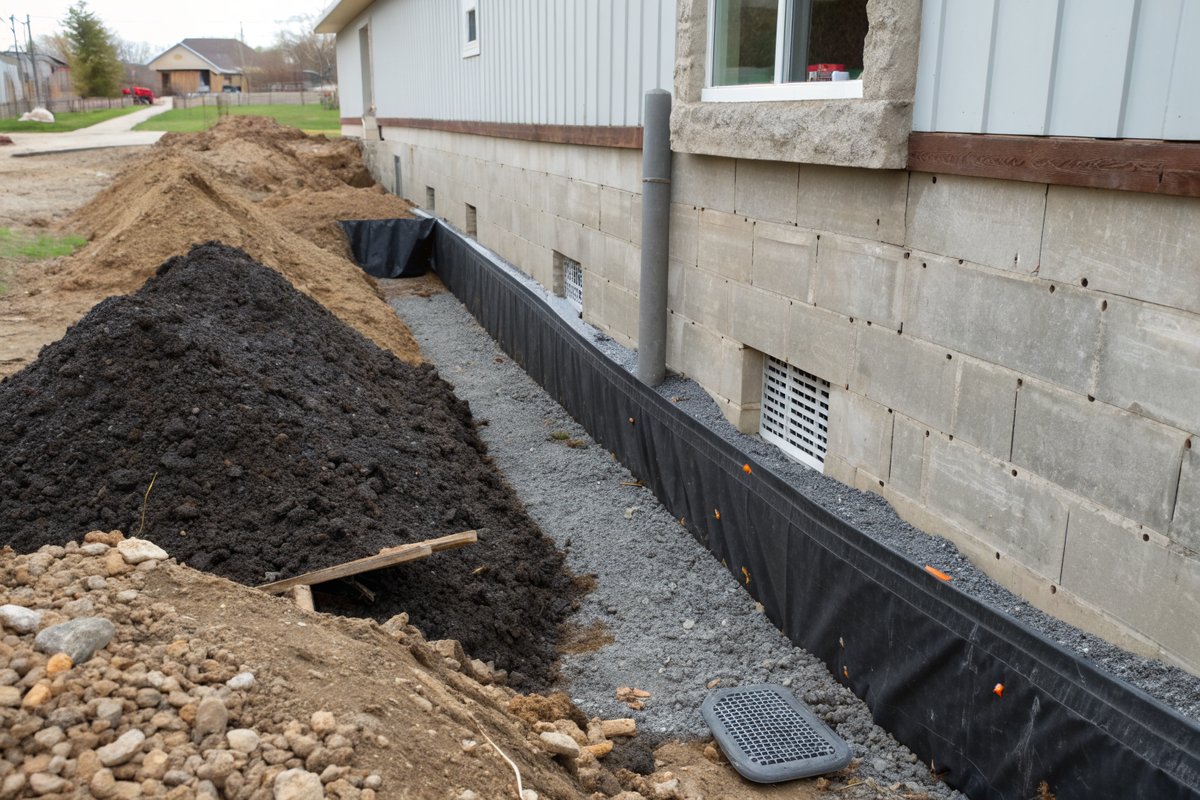
Outside, the work means digging to the footing and applying a membrane, often with new drain tile at the base. It stops water before it touches the wall.
Wall type shapes the plan. Census survey data shows more than a quarter of Des Moines homes (26.7%) date from 1939 or earlier, and close to half (48.9%) from before 1960. Those older basements often have brick, block or early poured walls with many joints for water to find. Newer homes still get wet when drain tile silts up, a sump quits or settled backfill tips the yard inward.
The ground matters too: the Des Moines Lobe, the last glacier to push into Iowa, stopped here and left pebbly, clay-rich till that can stay wet a few feet down from March into June. In humid summers, a vapor barrier and a dehumidifier can handle dampness that isn't true seepage.
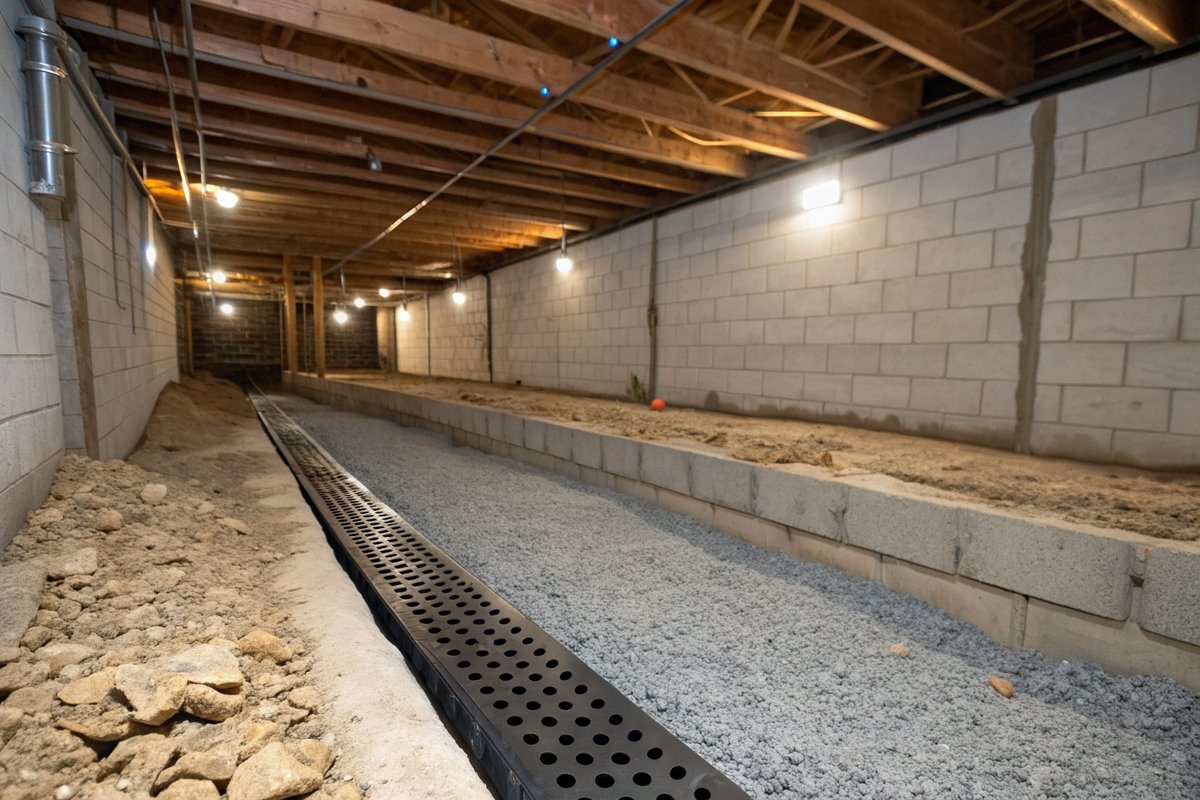
Jobs That Fall Under Basement Waterproofing
- Wet floor-wall seam. An interior perimeter drain and a sump give water at the footing somewhere to go.
- Old brick or block. Collecting water low along the footing is often simpler than sealing every joint.
- A newer pit that struggles. A worn pump, a blocked discharge line or drain tile that never reached the pit.
Price Ranges With Sources
| Cost row | Figure | Source (year) |
|---|---|---|
| Typical basement waterproofing project | about $3,000 to $10,000 (average about $5,000) | Fixr national (2026) |
| Interior perimeter drain, per linear foot | $40 to $120 | Fixr national (2026) |
| Sump pump installation | $600 to $2,500 | Fixr national (2026) |
| Epoxy crack injection, per crack | $250 to $1,000 | Fixr national (2026) |
| Waterproof paint or sealant, per sq ft | $1 to $8 | Fixr national (2026) |
These are Fixr's 2026 national ranges, not Iowa figures and not this site's prices. Digging outside the wall has no published figure here; request a separate line for it. For a ballpark, try the cost calculator.
How the Work Usually Goes
- Your notes. Which walls get wet, and in what season.
- A look inside and out. Gutters, grading and window wells usually get checked too.
- A written contract. Ask for one that spells out the drain's length, the pump and where it discharges, plus materials, the price, when each payment falls due and the warranty, signed by both sides, with a copy for you.
- Permits. At a Des Moines address, plumbing work needs a plumbing permit taken out by a state-licensed plumber; a building permit may apply to structural repair. For a drain and sump it depends on scope, so the contractor confirms with the Permit and Development Center (515-283-4200) or a nearby town's office.
- Payments in step. Pay as the work moves along, never everything up front, with written lien waivers before the final payment.
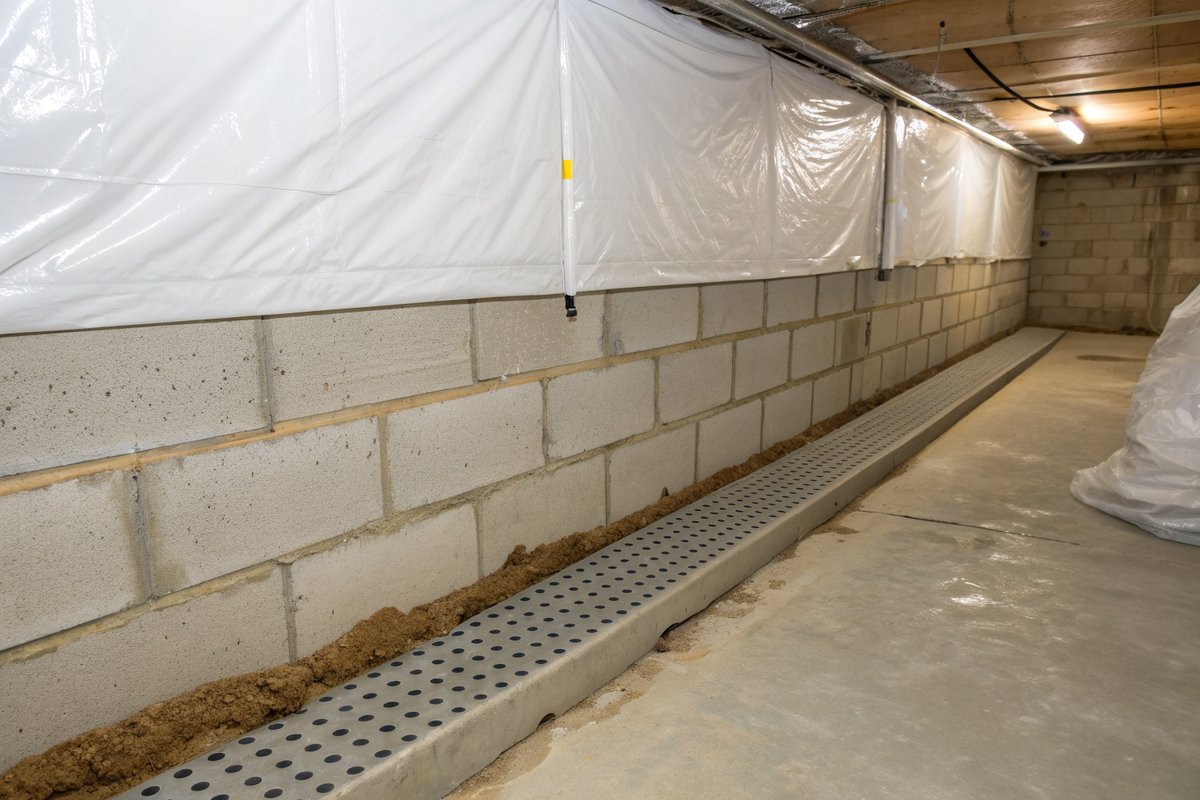
What Makes This Easier
You describe the basement once, and one independent contractor receives it. This site is a referral and advertising service, not a waterproofing company or plumber, with no Iowa contractor registration or plumbing license. A contractor may pay it a flat advertising fee; you pay the site nothing and get nothing from it.
Iowa has no state license for waterproofing, but anyone making $2,000 or more a year from construction files a state registration. Check it yourself with DIAL at 515-242-5871, and ask for insurance certificates and recent local customers.
Questions Homeowners Ask
How does a contractor choose between an inside and an outside system?
It often comes down to where the water gets in and what surrounds the house. An interior drain handles water rising at the floor seam and leaves the yard alone; an exterior membrane keeps the wall itself dry but means excavation. Ask for the reasoning in writing.
Where should the sump water end up?
Outdoors, on ground sloping away from your foundation and the neighbors, never into a floor drain, a laundry tub or the sanitary sewer. Before anything is connected to a pipe, ask a state-licensed plumber or your city where the water should go.
Other Basement Fixes
Water at a single spot may be a job for basement leak repair or foundation crack repair, and the sump pump installation and basement drainage pages cover the parts of a full system.
Request a Waterproofing Estimate
Use the form to say which walls get wet and when. One independent local contractor receives the request and, if it takes the job on, gets in touch to see the basement and write its own estimate. Nothing is agreed until you choose to sign. The form is the way to send a request.