Foundation Crack Repair in Des Moines, IA
A crack in a basement wall in Des Moines, IA, in Polk County, Iowa, is usually narrow and long settled, and it matters mostly as a path for water rather than as a sign of a weaker wall. Describe yours on a short form, and one independent local contractor receives it.
Not sure if we cover your area? Check now ↓
Basement Estimate Request
Takes about 30 seconds. One local contractor gets it and contacts you.
Your details go to one independent contractor who works around Des Moines, IA, and that contractor gets in touch with you directly. See our Referral Marketing Disclosure.
When a Crack Lets Water In
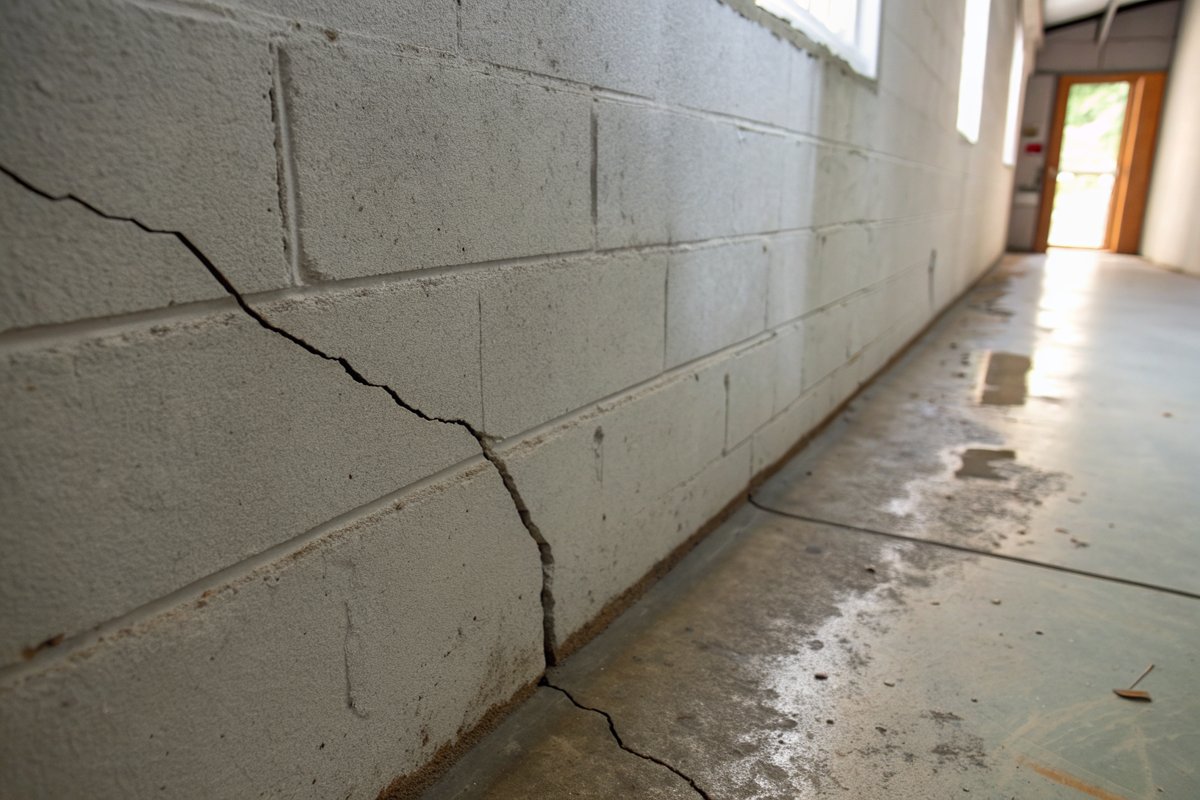
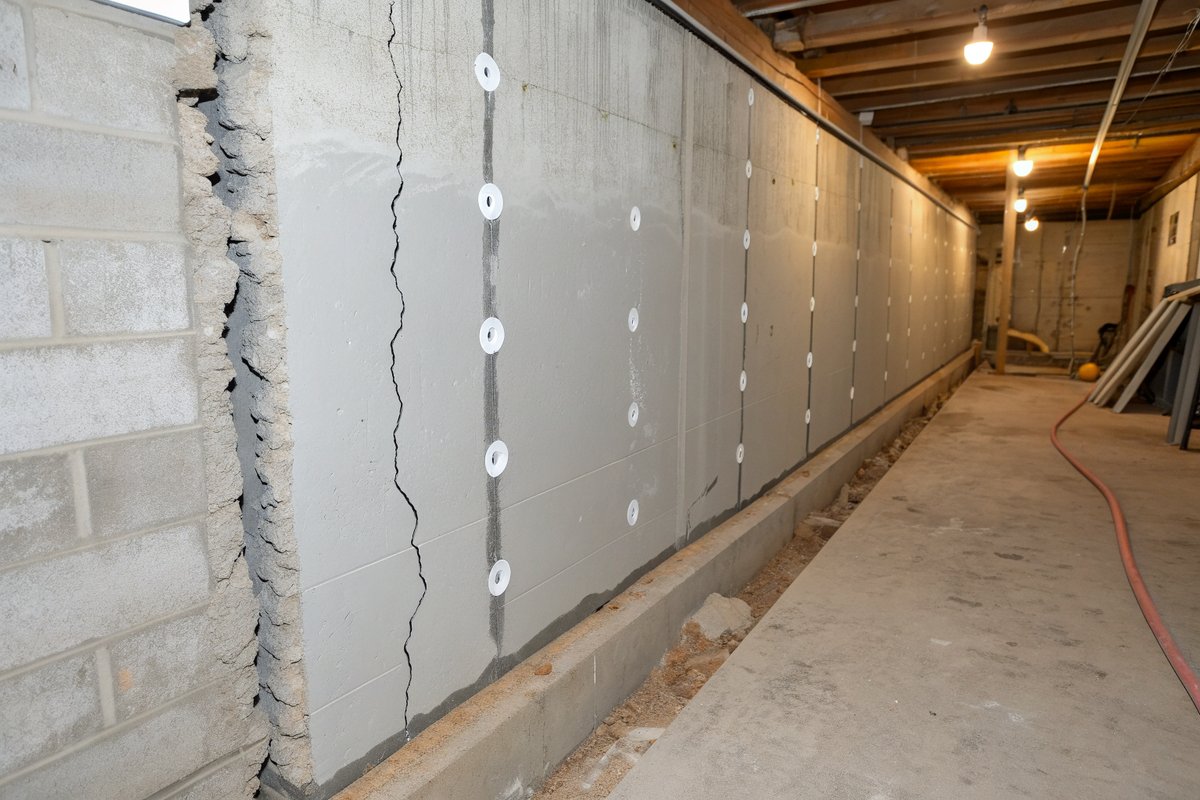
Poured concrete shrinks as it cures, so thin vertical or slightly angled cracks are common, newer homes included. Many never leak. When one does, the usual repair is injection: ports go in along the line, and epoxy or polyurethane is forced in until the crack is filled from face to face.
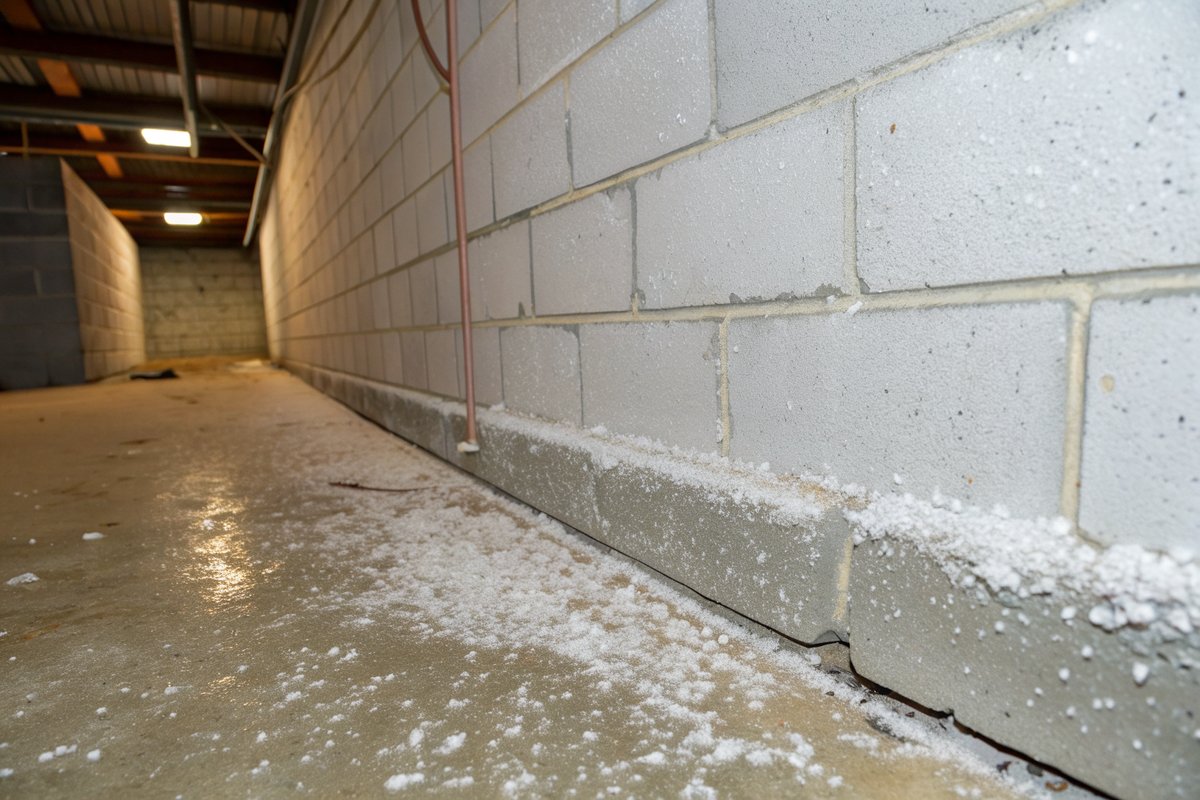
Concrete block cracks along its mortar joints, often in a stepped line. Injected material can vanish into the hollow cores, so contractors more often repoint the open joints, sometimes adding a drain to ease the water pushing from outside.
Des Moines has plenty of older basements: Census survey data puts more than a quarter of the city's homes (26.7%) at 1939 or earlier. Older brick foundations can lose mortar over the decades rather than crack straight through, and the usual remedy is repointing with a mix suited to old masonry.
Weather adds pressure. Water in a crack can freeze and expand, opening it a little each winter, and in spring the glacial till under much of the metro can stay wet, so soaked soil presses on walls and feeds any opening.
A long horizontal crack, a wall that bows inward, a crack whose edges no longer line up, or one that keeps getting wider is worth having looked at soon. Pencil the date at each end so change is easy to spot.
Jobs That Fall Under Foundation Crack Repair
- Thin poured-wall cracks. Sealed by injection from the basement side, with no digging.
- Stepped block joints. Open mortar is repointed, and a drain may relieve the pressure behind the wall.
- Worn brick mortar. Worn joints are cleaned out and refilled with a softer, matching mix.
- Spring-only seepage. The crack is sealed, and runoff on that side of the house is turned away.
- Sideways crack or bulging wall. Good to have looked at soon.
Price Ranges With Sources
| Cost row | Figure | Source (year) |
|---|---|---|
| Typical basement waterproofing project | about $3,000 to $10,000 (average about $5,000) | Fixr national (2026) |
| Interior perimeter drain, per linear foot | $40 to $120 | Fixr national (2026) |
| Sump pump installation | $600 to $2,500 | Fixr national (2026) |
| Epoxy crack injection, per crack | $250 to $1,000 | Fixr national (2026) |
| Waterproof paint or sealant, per sq ft | $1 to $8 | Fixr national (2026) |
Most single-crack jobs land on the injection row. Repointing and structural repair carry no published figure here; have each shown on its own line. Every row is a 2026 national range from Fixr, not a price from this site. The cost calculator can sketch a rough budget.
How the Work Usually Goes
- Measure first. Note each crack's length and width, which wall it's on and when it seeps.
- The repair in writing. Ask for a contract naming the method, the material (epoxy, polyurethane or mortar), the price, the payment schedule and the warranty terms.
- Permits. Structural work such as wall bracing may need a building permit, from the Permit and Development Center (515-283-4200) at a Des Moines address or a nearby town's own office. Norwalk, IA, for one, requires a permit for an egress window if its size changes. Ask who pulls each permit.
- Pay in stages. Never the whole amount before work begins, and written lien waivers before the last payment.
What Makes This Easier
One description of the crack goes to one independent contractor, who can explain what it finds and price it in writing. This site is only a referral and advertising service; it never visits, prices or gives an opinion on a wall. A contractor may pay it a flat advertising fee, while you pay the site nothing and receive nothing from it.
Iowa has no state license for waterproofing or foundation crack repair, but anyone earning $2,000 or more a year from construction work must register with the state. Check the registration yourself with DIAL at 515-242-5871, and ask for certificates of insurance and local customers you can contact.
Questions Homeowners Ask
Does every crack need repair?
No. A thin vertical line in a poured wall often traces back to curing and may stay dry for years. It makes sense to have a crack seen when it leaks, runs sideways for a long stretch, keeps widening, has edges that no longer meet evenly, or sits in a wall that leans inward.
What is the difference between epoxy and polyurethane?
Epoxy hardens rigid and bonds both faces of the crack, which suits a spot where strength matters. Polyurethane expands into a foam that stays slightly flexible, a frequent pick when keeping water out is the aim. Either way, the contract should name it.
Why does a crack leak only in spring?
Snowmelt and spring rain come while the ground is cold, and till around many basements can stay soaked into early summer. A crack that stayed dry all winter can begin to seep once that water presses on it, then dry out again by July.
Other Basement Fixes
If the crack is one part of a damp basement, the basement drainage, basement leak repair and full basement waterproofing pages cover the wider picture.
Request a Crack Repair Estimate
Tell the form how long the crack runs, what the wall is made of and whether it lets water in. One independent local contractor receives the request and may get in touch to look at the wall and write its own repair price; whether to go ahead is always your choice. The short form is the way to send it.